Vibe coding explained: How to build websites and apps with AI
-
- What is vibe coding?
- Why is vibe coding important today?
- How does vibe coding work in practice?
- What are the core principles behind vibe coding?
- What are the main benefits of vibe coding?
- What challenges should you expect with vibe coding?
- What can you build with vibe coding?
- How does vibe coding maintain code quality and work with existing codebases?
- How does vibe coding work in Coderick AI?
- How can you start with vibe coding today?
- Frequently Asked Questions (FAQ)
You no longer need to be a professional coder to build your own website or app. A new, AI-powered approach called “vibe coding” allows anyone to create software simply by describing what they want in plain English, turning their words directly into a working application.
In this guide, we’ll explain how vibe coding works, why it’s important, and how you can use it to bring your ideas to life without needing to be a programmer (or hiring one).
Key takeaways
- Vibe coding definition: An AI-driven software development method where you use prompts in plain language to build an application.
- Anyone can use it: It removes the traditional barriers of cost and technical skill, allowing anyone to build custom software quickly and affordably.
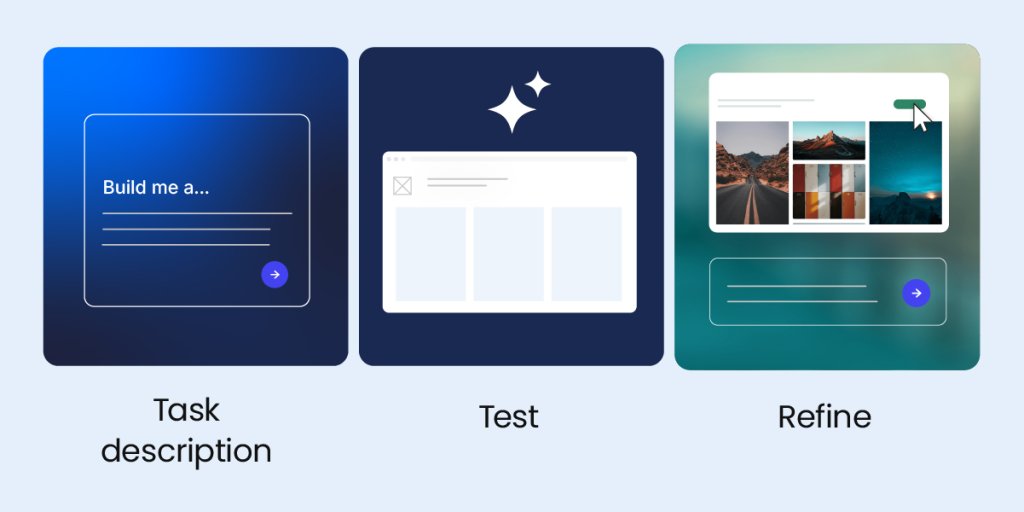
- It’s a three-step loop: Define your task in plain language, review the AI’s output, and refine it until it’s perfect.
- Just know what you want: Success requires nothing more than a clear vision to guide the AI and a secure platform.
- You can start now: The best way to begin is to open a tool like Coderick AI and provide a prompt that outlines your desired features and goals.
What is vibe coding?
Vibe coding is an AI-driven software development method where you create websites and applications just by describing what you want in plain language. This approach is often called “intent-first” programming because the entire process begins with your vision, not with a line of code.
You simply state your goal in a prompt, and the AI does all the technical heavy lifting. Although it has coding in the name – and you can also hear it called “vibe programming” – no actual technical skill of the sort is required on your part. All you need is an idea of what you want to build.
Why is vibe coding important today?
The accelerated penetration of AI in our lives in the past few years has impacted software development as well and made vibe coding possible. AI has proven extremely good at writing code – just as good as at writing any other text you wish it to. Even modern developers now use it to speed up their work and make it do the heavy-lifting, while they focus more on ideation and code quality refinement. This shift highlights the growing importance of vibe code in today’s development workflows, where creativity and decision-making matter more than manual execution.
If in the past, bringing an idea to digital life meant you had to either invest months learning to code or spend a significant budget hiring developers, now vibe programming gives you a third option, breaking down these long-standing barriers in several key ways:
- Vibe coding allows anyone to build software. The power to build software is no longer limited to people with special skills. Vibe coding puts that power directly into the hands of entrepreneurs, small business owners, marketing professionals, and, well, literally anyone.
- It decreases the time to completion. By automating the coding process, you can turn what might have been a six-month project into something you can build and launch in a fraction of the time – sometimes in just a few minutes or hours.
- It reduces costs significantly. By removing the need to hire expensive developers, vibe coding makes building custom software financially accessible for small businesses, startups, and solo projects.
- Vibe programming cuts through complexity. You no longer need to worry about choosing the right frameworks, databases, or security protocols. The output is activation-ready thanks to AI handling the technical heavy lifting.
How does vibe coding work in practice?
The core vibe coding technique is a straightforward, back-and-forth process between you and the AI. It can be broken down into three simple steps.
Step 1: Define your intent
You start by telling the AI what you want to build. This is done in simple, everyday language, just like you’re talking to a person. You don’t need to know how it should work technically; you just need to explain your idea.
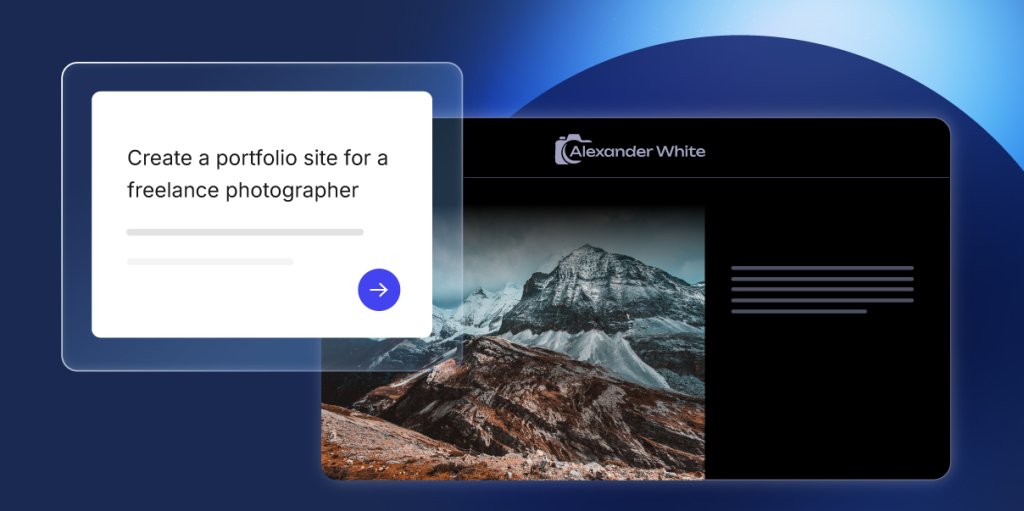
For example, you can say: “I need a modern and friendly website for my bakery with a gallery for my cakes and a contact form.”
From there, the AI will guide you. It may ask you questions to better understand your vision, such as “What information should the contact form collect?” or “Would you like to add a menu section showing your prices and cake flavors?” This initial conversation is the foundation for your entire project.
Step 2: Review, refine, test
Are you vibing with the look and feel of AI’s first version of your project? You most likely would like to change some things. That’s where you start to review and refine. For example, you can write prompts like:
“Change the main color to a light pink,” or
“Add a map to the contact page.”
This initiates a back-and-forth process where you provide feedback and the AI makes adjustments.
Also, if you want your application to have some functionalities – like a contact form where your clients can enter their name, email address, and write you a message – you should test if it works properly. Just try it out and tell AI if it needs to fix anything.
Step 3: Repeat until perfect
The back-and-forth refinement from Step 2 can be repeated as many times as you need. If you don’t like the new color, you can ask for another one. If you think of a new feature, you can ask the AI to add it.
You continue this process of providing feedback and seeing the changes instantly until the application looks and works exactly the way you want it to.
What are the core principles behind vibe coding?
The process can be broken down into 3 core vibe code principles that take an idea and turn it into a finished product.
- Vibe coding always starts with a simple definition of the user’s intent in natural language. This means you state your goal and desired outcome just as you would in a conversation, without needing any technical jargon.
- All progress is achieved through a structured cycle of review, iteration, and verification. This means you review the AI’s output, request changes or new features (iteration), and verify that everything still works as expected after each update.
- The path to a finished application is built on the repetition of this refinement cycle. This creative loop continues as many times as necessary until the application perfectly matches your vision.
What are the main benefits of vibe coding?
Vibe coding is fundamentally changing who can build software and how it gets done. The growing adoption of this approach highlights the core vibe code benefits, which make software development more accessible, faster, and less dependent on deep technical expertise. Below are some of the key advantages you gain when using vibe programming:
- Drastically reduced time to market. You can conceive, build, and launch a functional application in a fraction of the traditional time – often in days, not months. This allows you to test new ideas, respond quickly to market needs, and deploy solutions with unprecedented speed.
- Lower barrier to entry. No programming knowledge is required. Vibe coding opens up software development to a much wider audience, allowing everyone to build the tools they need themselves, without having to hire a developer.
- Significant cost reduction. By reducing or eliminating the need for large development teams or expensive freelance contracts, vibe coding makes building custom software financially accessible for small businesses, startups, and internal projects with limited budgets.
- Focus on creativity and strategy. Because the AI handles the technical execution, you can concentrate entirely on the user experience, business logic, and overall strategy of your application. Your energy is spent designing the right solution, not wrestling with code.
- Empowered experimentation. The ability to make changes instantly through simple conversation encourages experimentation. You can test new features, get feedback, and change direction without worrying about derailing the project or incurring significant technical debt.
- Effortless evolution and upgrades. Your software’s evolution remains entirely in your hands. Adding new features, upgrading functionality, or doing a complete redesign is fast and affordable, allowing you to make significant improvements at any time through simple conversation.
What challenges should you expect with vibe coding?
While powerful, vibe coding comes with a few hurdles. Understanding the main vibe coding challenges helps you approach the process with the right expectations and a more effective mindset.
The “blank canvas problem”
Vibe coding works best when you have a clear vision of what you want to build. If your problem definition is vague or your goals are unclear, the AI will struggle to deliver a useful result. The quality of the output is directly proportional to the quality of your input and instructions.
Security and trust
When an AI generates code, ensuring that it is secure from vulnerabilities is paramount. You are placing trust in the platform to create robust, safe code and to handle your data responsibly. This is why it’s crucial to use a platform built on a secure, trusted infrastructure.
Context collapse
In a long and complex conversation, the AI can sometimes lose track of previous instructions or misinterpret a new request in the context of the overall project. This requires you to be clear and sometimes re-state constraints to keep the development process on track.
What can you build with vibe coding?
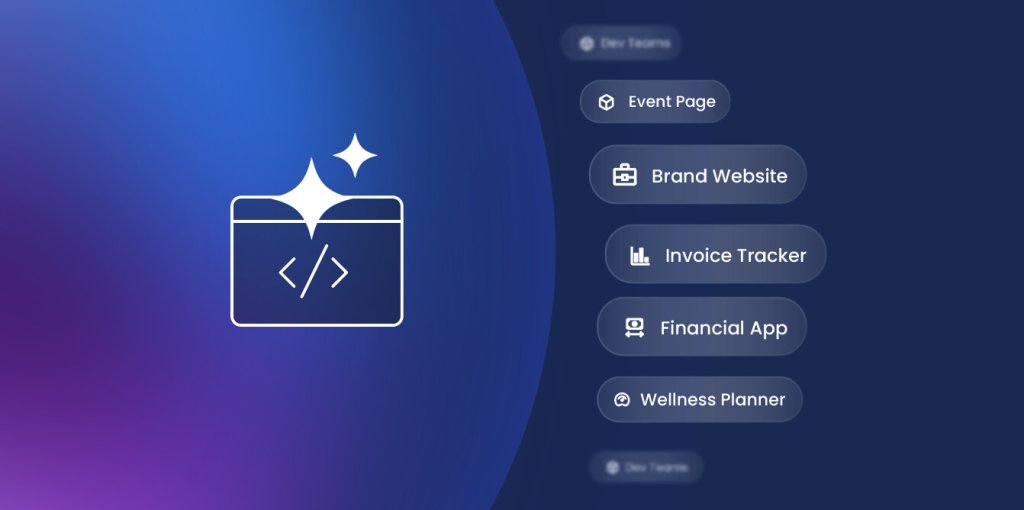
The applications for vibe coding are vast, covering everything from public-facing websites to complex internal software. Because it excels at creating data-driven applications with clear user interfaces, it’s suitable for a wide range of real-world projects. The following vibe coding examples illustrate this versatility:
- Websites. You can build responsive websites for nearly any purpose, such as professional portfolios to showcase work, marketing sites for new products, or event pages with registration forms.
- Custom apps. Beyond websites, you can build focused, standalone applications that feel like native software. These can be designed for specific tasks, offering a rich user experience for things like data entry, calculations, or displaying information from an external source.
- Internal business tools. Streamline your company’s operations by building custom tools tailored to your workflow. Examples include custom CRM systems to manage customer data, project management dashboards to track progress, inventory trackers, or automated expense approval workflows.
- Client-facing portals. Develop secure portals where your clients can log in to view project updates, access shared files, check billing information, or manage their own accounts. This provides a professional and centralized experience that improves client communication and service.
- Minimum Viable Products (MVPs). Vibe coding is ideal for building a Minimum Viable Product (MVP), which is a basic, functional version of an application designed to test a business idea with real users. Launching an MVP allows you to gather crucial feedback and validate your concept before committing to a full-scale development team.
How does vibe coding maintain code quality and work with existing codebases?
You might hear some hardcore programmers argue that AI-generated code is inferior to code written by hand. While that may have been a concern in the early days of this technology, things are evolving at an incredible pace, and that information is often outdated.
Modern platforms are engineered to ensure high vibe coding quality, and aim to create clean, efficient, and secure code. As long as the platform is built on a trusted infrastructure, the quality is reliable for the vast majority of projects.
Another common concern is working with existing codebases. What happens if you already have something built for you or by you and want AI to iterate with it?
The process works by simply providing the AI with your existing code as context. The AI “reads” and analyzes your entire codebase to understand its structure, purpose, and how the different parts connect. From there, you use simple, natural language to describe the changes you want, such as:
- “Add a ‘Status’ field to the customer contact form.”
- “Change the color scheme of the main dashboard.”
- “Refactor this section to make it load faster.”
The AI then intelligently modifies the existing code to incorporate your request. The core loop still applies, making vibe coding code review a simple process of describing, reviewing, and refining the AI’s suggestions. This workflow is ideal for evolving an existing application, making it a powerful tool for ongoing vibe coding maintenance.
How does vibe coding work in Coderick AI?
There are many vibe coding tools you can use. You can even start with general models like ChatGPT, Perplexity, or any of the big AIs directly. However, it’s preferable to choose a specialized tool – they’re built specifically for development, using advanced prompt engineering behind the scenes to improve the quality and security of the code and to help it integrate into a proper workflow.
SiteGround’s Coderick AI is a prime example of such a specialized tool and represents one of the most sophisticated vibe coding solutions available today.
What truly sets it apart is how it answers the critical question of “where and how will this code live?” Most AI coding assistants leave you with a block of code, forcing you to solve the complex puzzle of hosting, databases, and security on your own. Coderick AI was designed to eliminate this fragmentation. It’s a complete, all-in-one platform where your “vibe” is transformed into a live, secure, and fully hosted application within a single, seamless environment.
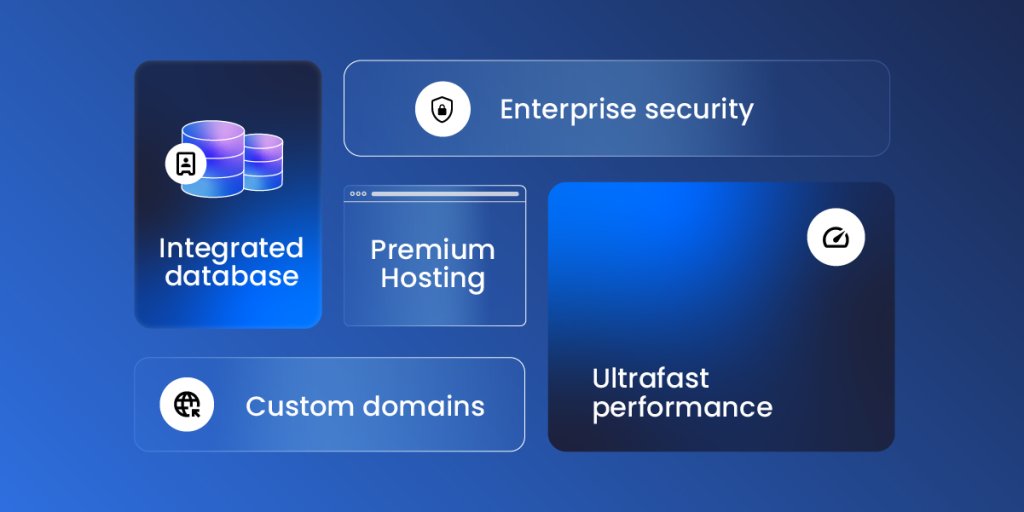
Coderick AI’s also:
- Secure by default. From your initial conversation with the AI to your live application, every step is protected by SiteGround’s enterprise-grade security systems. You can build with confidence, knowing your project and your users are safe.
- Running on world-class hosting. Your application goes live on the same battle-tested SiteGround infrastructure that powers millions of websites. This ensures ultrafast performance and reliability without any extra setup or configuration.
- Activation-ready. Forget complex deployment pipelines and configuration files. When your project is ready, you simply hit ‘Publish,’ and Coderick AI handles the rest. Because it’s fully integrated with our hosting platform, your application goes from concept to live on the web in a single step.
- Responsive by default. Every website and application you create with Coderick AI is automatically optimized to look sharp and work perfectly on any device, from desktops to smartphones.
- Built for real work. Coderick AI is designed for production from day one, with critical features like built-in version control (so you can experiment freely) and ready-to-use user authentication included out of the box.
How can you start with vibe coding today?
All you need to get started with vibe coding is access to an AI. That’s it. While any general model can work, you’ll get the best results with a tool specifically built for development, such as Coderick AI.
You don’t need special preparation or formal vibe coding tutorials; the process is designed to be intuitive. Start explaining your idea in your own words and watch it take shape. Your next great project is just a conversation away.
Still, if you need ideas or want to get ready prompts, Coderick AI has a nice library of templates and prompts for this purpose.
These prompts are expertly crafted starting points designed to show you what’s possible. Think of them as creative warm-ups. You can launch one with a single click and then start the refinement process immediately. You’ll see examples like:
- “Design an invoice tracker that keeps invoices, clients, and payments in one place. Make it easy to create invoices, track status (draft/sent/paid/overdue), and filter by client or date.”
- “Create a task tracking app for a small team. It should have a Kanban board with To Do, In Progress, and Done columns. Let me add tasks and mark them complete.”
The most important thing to remember is that it’s a creative process, so have fun and don’t worry about getting it perfect on the first try.
Frequently Asked Questions (FAQ)
Vibe coding is a method of creating applications by describing your requirements in natural language to an AI, which then generates the complete, functional software for you.
No, you do not need any programming experience. If you can describe your idea clearly in your own words, you have all the skills necessary to build an application with vibe coding.
In Coderick AI, vibe coding works by translating your natural language descriptions of an idea into a complete, secure, database-powered, and fully-hosted web application without requiring you to manually write code or manage servers.
Using vibe coding in Coderick AI, you can build full websites, prototypes, internal tools, client portals, and more.




Comments ( 0 )
Thanks! Your comment will be held for moderation and will be shortly published, if it is related to this blog article. Comments for support inquiries or issues will not be published, if you have such please report it through our official channels of communication.
Leave a comment
Thanks! Your comment will be held for moderation and will be shortly published, if it is related to this blog article. Comments for support inquiries or issues will not be published, if you have such please report it through our official channels of communication.